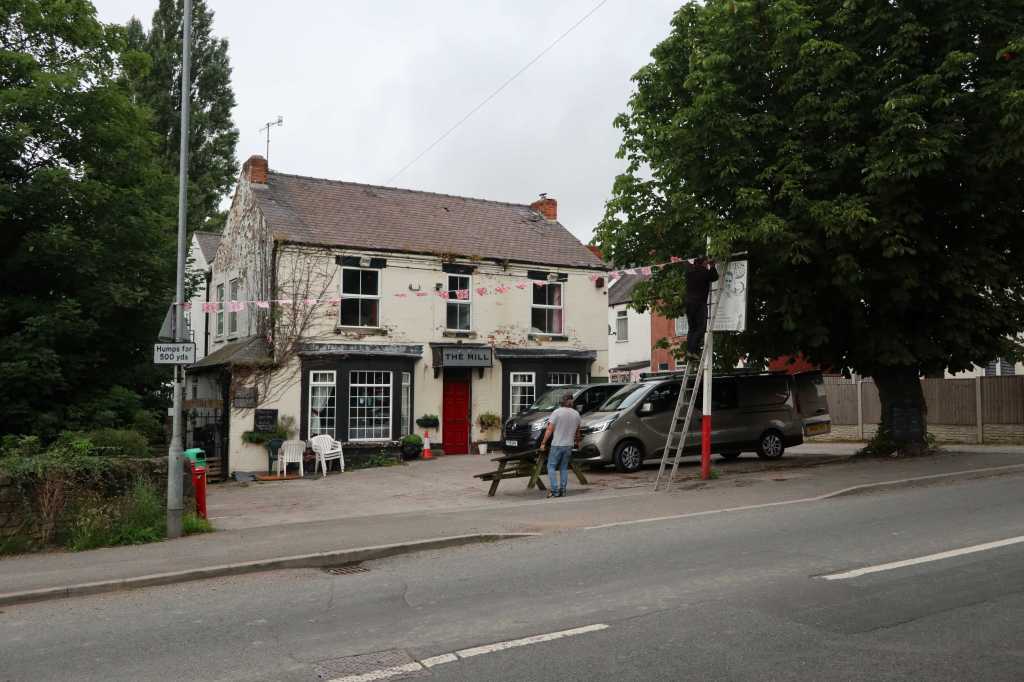
Our last blog reported on the closure of the Markham Arms, this blog looks at yet another closure – The Mill, Wheeldon Mill.
Early History
It’s pretty safe to say that the ‘New Inn’, as it was originally known, appeared on the scene sometime in the period from 1841 to 1846 – it was first mentioned in a trade directory from the latter date.
The Brimington tithe award and map of 1849 shows the premises – which are described as ‘Public house, 3 cottages, Windmill Field (Pit Hills)’, with James Camomile and ‘three others’ occupying the land, of the which the cultivation state was described as ‘grass’). Camomile owned the land, pub and cottages, of a little over 2 acres. He also owned an adjacent plot of 3 roods and 2 perches, slightly to the east of the pub, on which were ‘3 cottages and gardens’ occupied by a John Cartledge & 2 others’. The cultivation state is described as ‘ironstone’.
Just a few years earlier – in 1827 – there was no sign at all of the pub or any building in ‘Windmill field’ in a survey of the parish of that date.
As stated, its first trade directory mention is in Bagshawe’s of 1846 with ‘James Camamile’ at the New Inn – one of four public houses in the parish. The previous directory to this, of 1841, makes no mention of either Camamile (or other various spellings of his name) or of the New Inn.
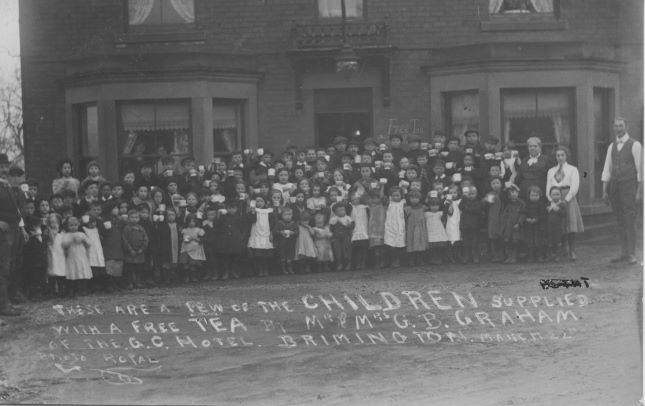
After 1846 a succession of trade directories allows us to identify the landlords. In 1852 James Ball is at the New Inn; Isaac Ball in 1857, William Ball in 1860, 1862, 1864, 1868, 1870 and 1872; James Ball in 1876, 1879, 1881; Herbert Hunt in 1888; William Baker in 1891 and 1895; James Henry Baker in 1895, and 1899 (also described as a coal dealer and separately as the latter in 1904); John Graham in 1904 and 1906 (by then the Great Central); George Bains Graham in 1912; Robert Britt in 1922; William Brown in 1925 and 1928 and latterly George Frederick Sims in 1932, 1936 and 1941.
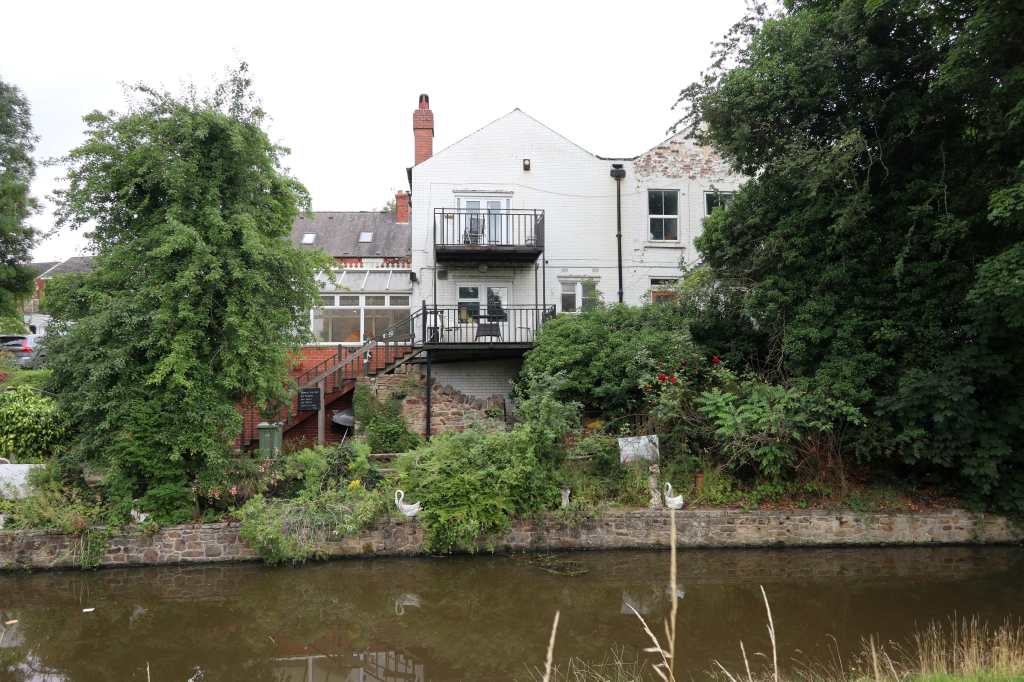
At some stage it seems likely that the original 1840s premises were extensively rebuilt or remodelled. Compare the two illustrations of the elevation facing the canal in this blog. The bottom 1886 engraving shows the inn at a much lower level than that recently taken.
Names changes and later history
John Hirst’s excellent ‘Chesterfield Pubs’ (self-published in 2005) and Jim McIntosh’s ‘North Derbyshire pubs past and present’ (Pynot Publishing 2008) tell us that the premises were first known as the New Inn – changing to the Great Central in 1903/4. This must have been in recognition that the New Inn was no longer new and to the arrival of the nearby Great Central Railway – with its Sheepbridge and Brimington Station, literally just across the road, opening in 1892. (The railway had originally been known as the Manchester, Sheffield and Lincolnshire Railway, but changed its name to reflect its new status after an extension was constructed from its mainline to London Marylebone which opened in 1899). Despite its name, the pub was never a railway owned property.
It was sold by Shipstones brewery as a free house in 1984. It’s name changed to The Mill in 1991.
The Mill suddenly closed at the end of July. An informal sale of some of the pub-related fittings was held shortly afterwards.
A famous owner
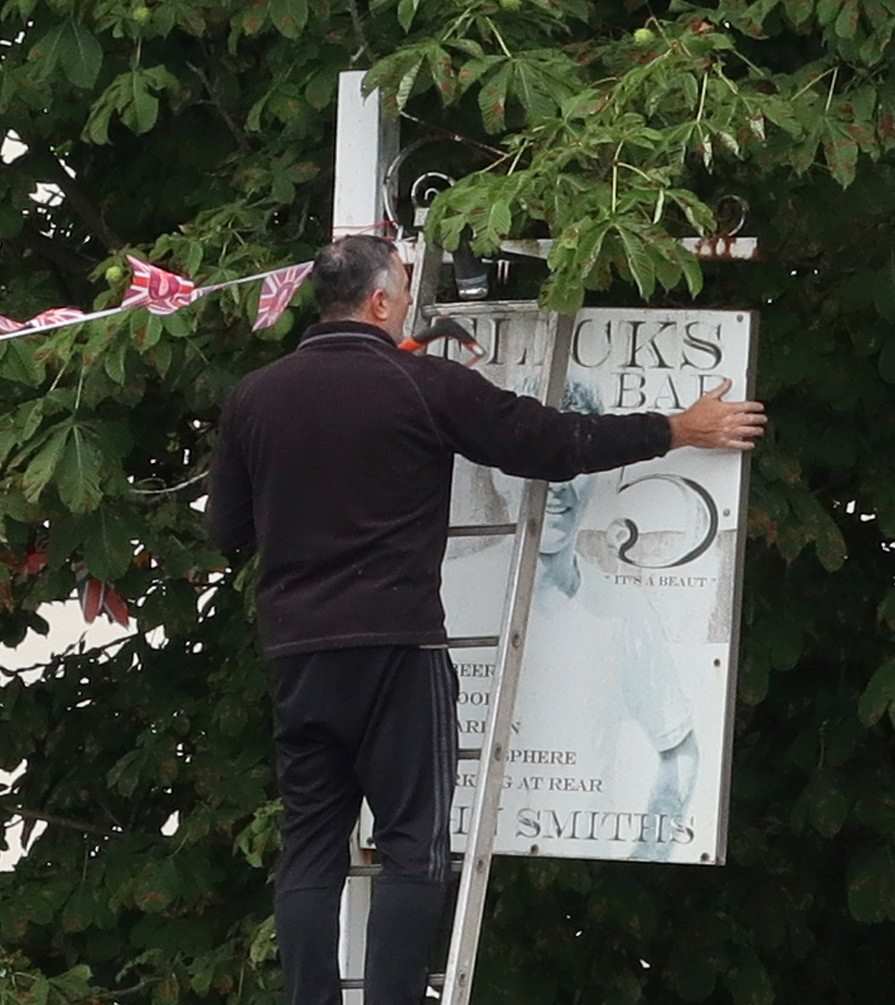
Undoubtedly the most famous land-lord (and owner) was former England and Sheffield Wednesday football club player Peter Swan (1936-2021), who concluded his career in the public house trade there. He had previously tenanted the Three Horse Shoes in Brimington and other local pubs. When Peter became ill with Alzheimer’s and was unable to continue with running the pub he still continued to live on the premises, the pub being run by his son Peter. The latter continued to run The Mill until its closure at the beginning of August. Many customers will remember that the walls inside the pub were adorned with some of Peter’s footballing memorabilia.
A notorious murder
A notorious murder occurred near the New Inn on 24 March 1886.
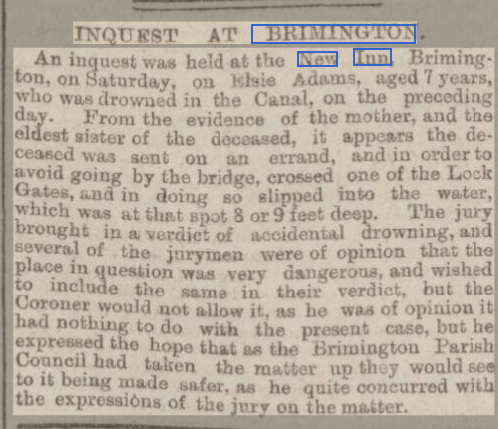
Herbert Crookes, a butcher, who lived at Cutthorpe, was taking a shortcut on the Chesterfield Canal back to his home village, after undertaking business in the area. Walking back from Clowne, with a considerable amount of money on him (around £70) he was ambushed on the canal, where screams were heard around 11.30 pm by a guard on the nearby Midland Railway and a boy at the New Inn. Next day Crookes’ body was found near the Bluebell Plantation. The inquest into his death was held at the New Inn, which was illustrated in the Derbyshire Times – we’ve reproduced it in this blog.
Crookes was buried in Old Brampton church-yard. Nobody was ever apprehended for his murder.

Real Ale
For some years The Great Central was known as one of only a few local pubs selling Shipstone’s ales (a now closed Nottingham brewery). It was the only Brimington pub to make 1975’s Campaign for Real Ale’s locally produced real ale guide, where it was noted as ‘a very pleasant pub with friendly hosts …’ – its Shipstone’s bitter was drawn by electric pump.
The pub was listed again in a 1977 real ale guide (joined by the Markham Arms). By 1990 it was described as a ‘two-roomed local …’ with both Shipstone’s bitter and mild for sale, with garden, bar snacks and traditional pub games. (By this time the only other Brimington entry in the good beer guide was the ‘recently altered’ Red Lion).
The future
When we first published this blog we were hopeful that the pub would be sold and hopefully reopened at some stage. Its beer garden and conservatory, with close proximately to the restored Chesterfield Canal, has made it a popular calling off point in more recent years along with a favourite haunt of regulars. But sadly this was not to be. As August 2025 the building has been sold and is currently under conversion into a dentist practice. Though the building will remain its days as a public house have ended.
Sources
- Campaign for Real Ale, Derbyshire ale – the CAMERA guide to Derbyshire (1990).
- Campaign for Real Ale Sheffield and District Branch, Where to find good beer in and around Sheffield (1977).
- Campaign for Real Ale Sheffield and District Branch, Real ale in south Yorkshire and north Derbyshire (1975 reprint).
- J Hirst, Chesterfield pubs (2005).
- J McIntosh North Derbyshire pubs past and present (2008).
- J Stubbs, History of Cutthorpe, part three (1985).
- P Swan, Setting the record straight (2006).
- Trade directories – Bagshawe 1846; Bulmer 1895; (Harrison) Harrold 1860, 1870; Kelly 1876, 1881, 1891, 1895, 1904, 1906, 1912, 1922, 1925, 1928, 1932, 1936, 1941; White 1841 1852, 1857, 1862, 1864, 1868, 1872, 1879.
- Derbyshire Times, Saturday 3 April 1886.
- Poor rate assessment survey book 1827 – Derbyshire Record Office (DRO), D636 A/PO1 and accompanying plan – DRO, D177 A/PC 27.
- Brimington Tithe Award and accompanying plan, DRO, D177 A/PC 136 and D643/A/PI/12/2.
 Brimington and Tapton Local History Group
One thought on “Another pub closes – The Mill and its story”