This is the final part of three blogs looking at the history of the Anglican mission church dedicated to St Mary on Brimington Common. Opened in 1878, nothing remains of this now demolished church.
The local history group’s yearly publication Brimington and Tapton Miscellany has been looking at the history of this ‘Tin Tabernacle’ type building in its editions 13 and 14. We’ve used these two articles as our sources here, though this blog, like the others, is very much shortened. If you want to know more we’d recommend you purchase these two editions.
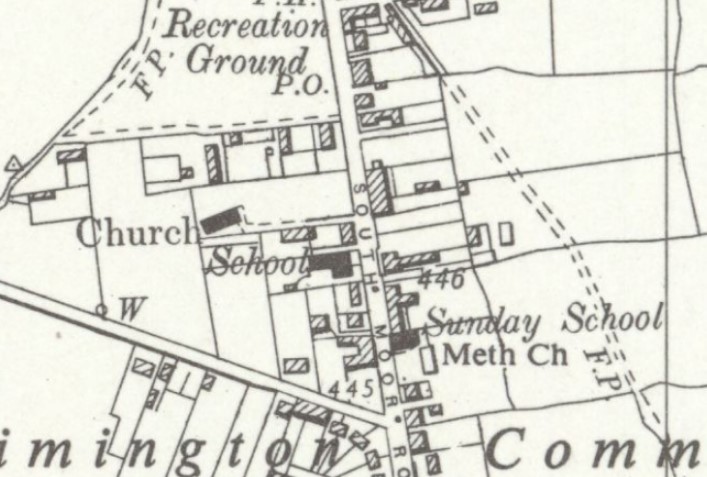
Courtesy National Library of Scotland – https://maps.nls.uk).
The mission church was built on land now mainly occupied by 1960s erected council/social housing on Grove Way, near Brimington Manor Infants’ school. The corrugated iron building was approached from an entrance off the present Manor Road. It had a relatively short life, probably closing sometime between the beginning of 1952 and the end of February 1953. This part takes the story up until closure. We will also look at disposal of the building and the land and just what comprised the actual building in our final future blog.
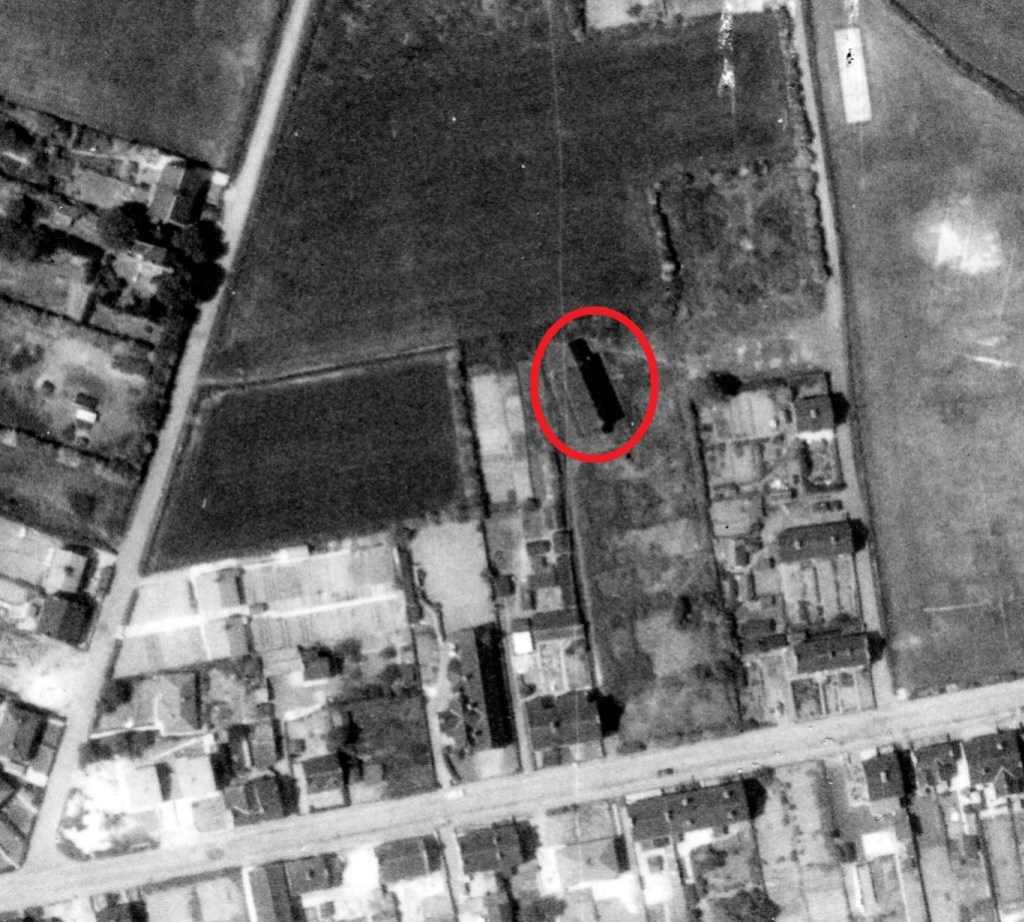
‘Now the church is not in use’
We left the story in part two at the Parochial Church Council (PCC) meeting on 26 February 1953, where Mr L Drury had raised the issue of the condition of the furniture and effects at St Mary’s ‘now that the church is not in use’.
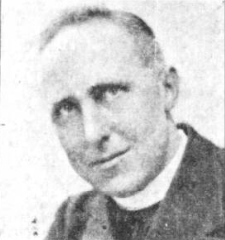
At the same meeting the rector (Langton-Edwards) reported that items likely to be affected ‘immediately by the damp, such as altar vessels, linen and vestments had been removed.’ Some were in use at St Michael’s. A committee was asked to look at the building to see if it could be made weather proof. We can, perhaps, deduce from this that services ceased at the building sometime between the beginning of 1952 and the end of February 1953.
Then followed a series of reports to the PCC indicating the decline of the building. The door needed attention by local joiner and undertaker Mr Mordue in April 1953. Roof sheets were loose in January 1955. In June of the same year there was gap at the entrance to the chancel and ‘children had found their way into the building by way of the back door’. Temporary repairs were to be made. One local resident remembers accessing inside the then abandoned church in the 1950s as a child; ‘the pews were still there and hymn books scattered willy-nilly and everything covered in a thick coat of dust.’
Roofing sheets had blown off, in recent gales, in March 1956. An overgrown hedge fronting Manor Road needed cutting early the same year, after unsuccessful attempts to get allotment holders, who occupied some of the land surrounding the mission church, to cut it.
The rector had some views on what might happen. He suggested four options that ought to be considered when he addressed the June 1953 PCC meeting:
- Make a fresh attempt to use it as it stands
- Move it to the Wikeley Way area and use it as a church
- Move to another site and use it for other purposes, e.g. a Sunday school
- Dispose of it.
The issue of St Mary’s was finally concluded in April 1956 when the PCC minutes record ‘Much as it is regretted, there did not seem any point in making a further attempt to re-open the mission church’. The rector had contacted most of the former members of St Mary’s; ‘and without exception, they did not believe it would be possible to revive St Mary’s as a church, and they were unanimous in their opinion that there was no call for a mission church in that part of the parish’.
Mr L Drury proposed that the archdeacon should be asked to dispose of the building and the land. Money raised, the PCC naturally thought, should be used by St Michael’s parish church in its restoration endeavours.
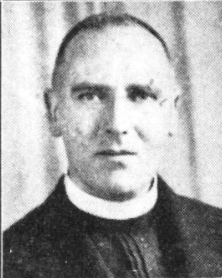
By this time the parish had a new Rector – David Ford – who had taken over in 1955. Ford wrote in the parish magazine in September 1956 stating that the PCC had taken the decision to demolish the building, sell off the materials and the land, the money going to urgently needed restoration works at St Michael’s. He did promise that due care would be taken over dispersal of the contents, also acknowledging that the decision ‘would be sad news to some who look back with affection to what S. Mary’s has been in the past’.
Disposal problems and delays
When the diocesan’s legal expert examined the deeds he identified a clause in the original conveyance. This indicated that the land on which the mission church stood should automatically revert back to the heirs of Singleton (as Rector he had made the original gift of the land in 1878), should the church not be used for worship for a period of 12 months. It was confirmed, however, in the late summer of 1956, that as the two plots had been united the plot was now determined as being one and that arrangements for a sale could be put in hand.
The allotment holders were due to 12 months’ notice to quit, which had been given – their contract terminating on 29 September 1957. It was emphasised that the gifts originally made to St Mary’s should be handled ‘with respect’. The Rev’d Peter Drury, (who from January 1957 was Rector at Christ Church Hackenthorpe and son of L Drury) asked for what was probably the communion ‘gong’ to be given to his church at that place, which was agreed. This gong has not been identified as still being in the building at Hackenthorpe, but Drury did write to the PCC acknowledging receipt.
In July 1956 the PCC agreed that the contents of St Mary’s should be disposed of as soon as possible. The rector of Newbold, an ex-curate at Brimington, Canon Moore, was to be offered the pews and some other items, in view of alterations then being carried out at his church. These were later refused, but he suggested that they might be useful at the mission church at Handley. This is the same Moore who had taken much time with the spiritual and other needs of the parishioners at St Mary’s chronicled in part one, from his arrival in 1936.
An inventory was to be drawn up, with any memorials placed in the parish church. The finance committee of the PCC were to oversee the necessary furniture disposals, with the rector placing an advertisement in the Derby Diocesan News.
In November 1956 it was reported that the inventory was now drawn up and that Handley church would take the pews (or at least some of them) if they were of the correct size. They would pay £25 for them, ‘new fronts’ (possibly alter fronts), kneeling boards, choir stalls and coco matting. Handley were also interested in some of the floor-boards. The offer was accepted. The PCC thought that the pulpit was ‘of little value’ (so was presumably scrapped) but two sanctuary seats were to be taken to St. Michael’s. The PCC thought that demolition of the building would be undertaken by the church’s own labour, but the finance committee would discuss this further. In January 1957 it was reported that the pews had been removed from St Mary’s – they had been found satisfactory for use at Handley. The building’s gas fires had been sold for £15.
Disposal and furnishing salvage work continued. In April the PCC agreed that pieces of carpet originally used in St Mary’s could be sold to a Mrs Marples for £2:5s:0d. The meeting also considered the future of the building itself. Two offers had been received – one for demolition, the other of sale with materials stored (presumably for erection elsewhere), which the PCC favoured. Next month PCC member – Mr White – was asked to contact Pleasley church as it was thought they might be interested in the building. The doors were also to be made safe, which was undertaken.
Despite these efforts at disposal there was still furniture present in the building in July 1957, when the PCC decided that the lectern, tables and chairs were to be removed. The meeting also heard that inquiries into the possible sale of the building had proved ‘fruitless’, resolving to place an advertisement in the Derbyshire Times.
Some progress was now made. In September the PCC heard that two offers had been received for the building (£35 and £50) and that it had been sold to a Mr H Middleton for £60(!), who was also interested in buying the land. WT Parker’s subsequently valued the land at £400, with Middleton offering £375, but the sale gets a little complicated thereafter as the Chesterfield Rural District Council (CRDC) were interested in acquiring part of the site.
Efforts were still being made in late 1957 to dispose of some of the furniture from St Mary’s. The rector having been in touch with a Mr Thomas, via ‘Church Illustrated’, the prayer desks (possibly the sanctuary seats taken to St Michael’s) and lectern were collected by British Road Services in early 1958. The items were a gift and raised no money for the church. Like the pews at Handley, do they still survive somewhere?
Demolition
Demolition of the actual ‘tin tabernacle’ corrugated iron building does not seem to have progressed quickly. In July 1960 the rector was offering to pursue Middleton ‘regarding the removal of the building’ – there being no further references in PCC minutes to the actual structure thereafter. A sad end to building-based missionary activities by the Church of England in the Brimington Common area.
Final disposal of the land
Reading from the PCC minutes it seems that the land was spilt in two. The back part, as it was sometimes referred to – where the church building actually stood – was acquired by the Chesterfield Rural District Council for use as part of their Grove Way housing development, for which they had offered £700 in February 1961. The front part was purchased by a private developer. Despite Mr Middleton’s earlier interest, it appears to have been sold for a little over £900 to a Mr Jarvis. The money received from the sale was forwarded to the Derby Diocesan Board of Finance (DDBF) in April 1961. It was not until January 1962 that the CRDC were conveyed their piece of the land by the DDBF.
Issues
For herein had been another issue – at one time it was by no means certain that monies from the sale would be received back into the church’s own funds. Fortunately, opinion taken from the PCC’s solicitors, Moody and Woolley, was positive and it appears that the sale money was transferred back from the Derby Diocesan Board of Finance into the church restoration funds. The first portion was definitely received in July 1961. This being a little over £762, it is probably that from the CRDC. For the record, the Church Commissioners had actually sanctioned sale of the land at the end of 1959.
Irony at closure
There is some irony in a statement made by the rector at a PCC meeting in May 1964, where it had been confirmed that they had used at least some of the money from the sale of the St Mary’s site for restoration works at St Michael’s. David Ford expressed ‘his concern for the lack of facilities on the Common’ stating that there seemed to be a ‘very necessary need for a Sunday school’ particularly as many new houses were being built!
A reminder
As alluded to in this account, it’s by no means certain that any of the items from St Mary’s disposed of actually survive.
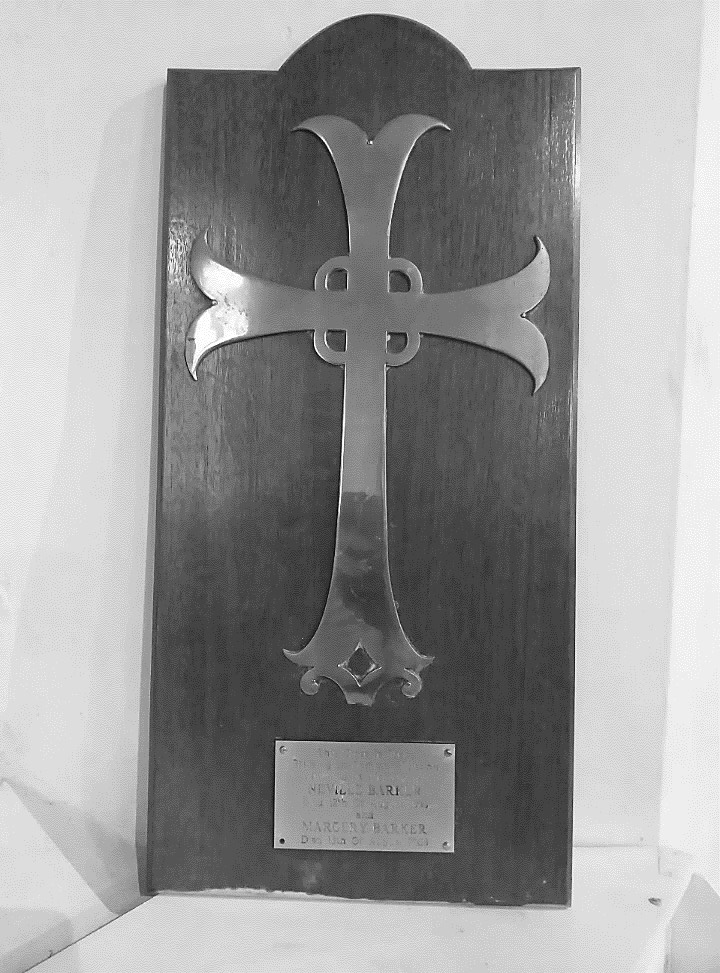
There is, though, at least one reminder of St Marys’ in the parish church, in the form of a cross-head, mounted on a wood backing with a plaque. This was a processional cross from St Mary’s. It was rescued by Brimington resident Neville Barker. He kept it for a number of years, before his wife gave it to the church following his death. It is not clear, however, whether this is the ‘processional cross of wood and brass with holder attached to south choir stall’ in the chancel at St Mary’s or the ‘processional cross’ kept in the sacristy of the church, both as described in 1940 inventory. It does not appear to be a cross dedicated to Harold C Unwin, as there in no inscription on it. Perhaps an ‘old processional cross’ disposed of by the PCC in June 1965 for £2, following a ‘private offer’, was the former St Mary’s cross, now back in the parish church. Whichever one it was it remains an example of the now increasingly long forgotten mission church of St. Mary’s, Brimington Common.
An end to our story?
So ends our shortened story of St Mary’s Mission Church, Brimington Common. There’s lots more about the church in our Miscellanies 13 and 14. Additionally you can learn about how buildings like that at St Mary’s – tin tabernacles – were used throughout the UK and the former British Empire. We also reproduce an inventory of the building in 1940s. This reveals, amongst other things that the building’s single bell was ‘noisy’ and that the baptism font originally came from St Michael’s church in Brimington.
We would, of course, welcome any recollections or photographs of St Mary’s from our readers.
 Brimington and Tapton Local History Group
Great! Thank you for this!
LikeLike