This blog, the first part of three, takes a short look at the now disappeared St Mary’s Mission Church on Manor Road – now the site of housing.
We’ll look at the church from its opening in 1878 until just after the Second World War. Our second part takes the story forward until the building’s closure around 1952-53. A final blog will look at disposal of the building, its site and contents.
The local history group’s yearly publication Brimington and Tapton Miscellany has been looking at the history of this Church of England ‘Tin Tabernacle’ type building in its editions 13 and 14. We’ve used these two articles as our sources here, though this account is very much shortened. If you want to know more we’d recommend you purchase these two editions.
The need for a mission church
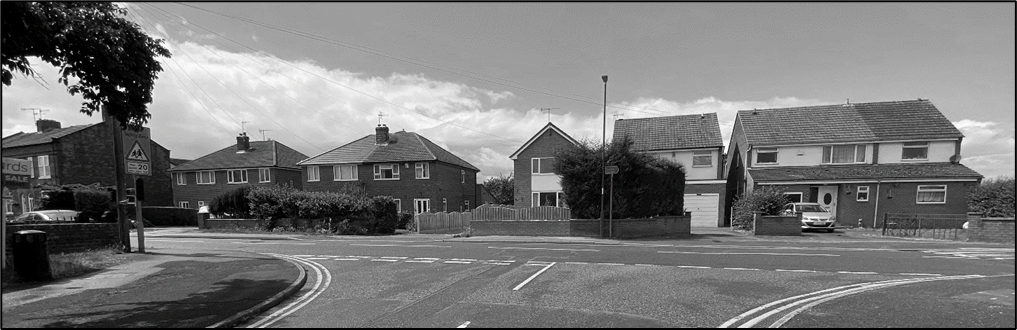
Construction of a road from Brimington to Calow (the present Manor Road), laid out as part of the Enclosure Act (enrolled in 1853), stimulated some ribbon building and additionally what is now regarded as a centre of development, about halfway along Manor Road.
In 1851 the Rector of Brimington had resorted to preaching out of doors on the common and elsewhere. The Primitive Methodists established a chapel here in 1867, the independents had a chapel in Calow from 1837. But the Church of England was not represented well. Calow did gain an Anglican church building in 1865, but this was somewhat distant and in a different parish So, it was thought that a mission church in the Brimington Common area was required – the ‘mother church’ being that of St Michael’s in the village centre.
The mission church is built
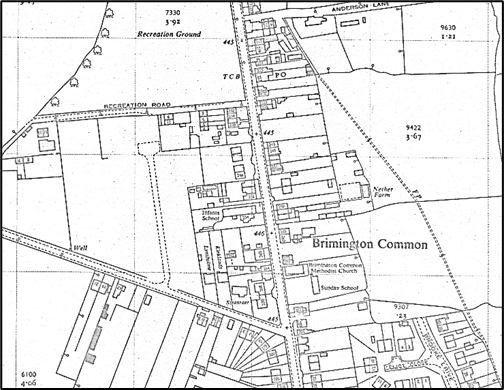
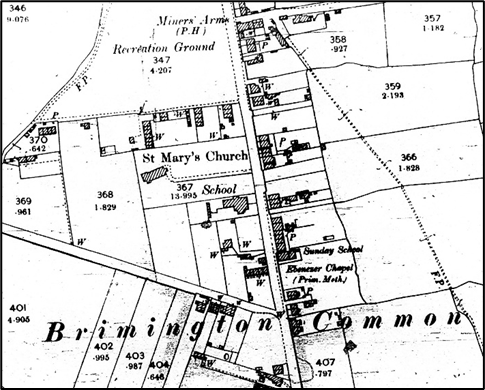
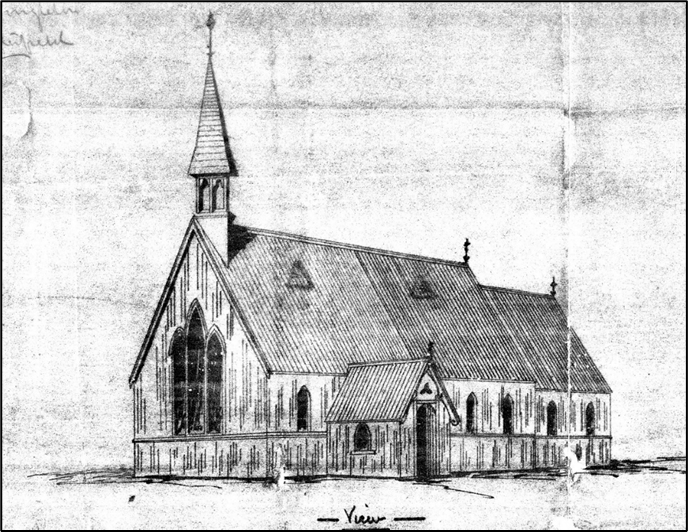
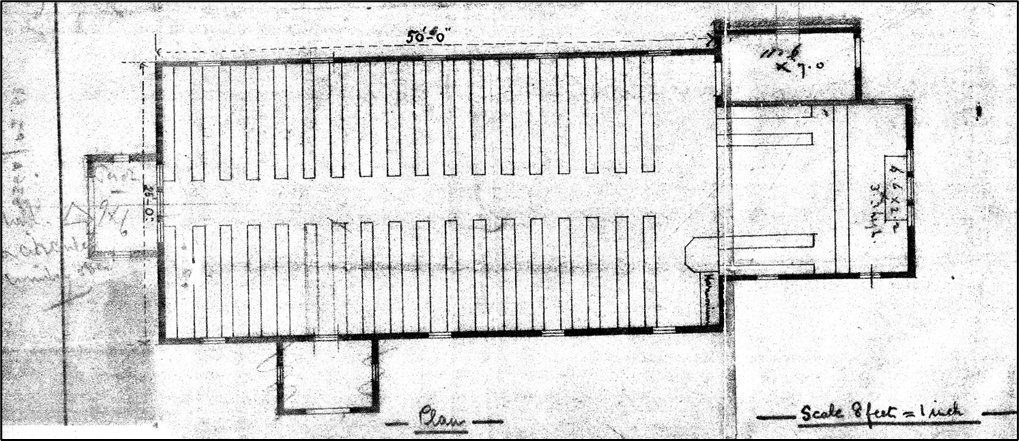
The Derbyshire Times of 20 July 1878 tells us that the Rev. Singleton (the then Rector of Brimington) had given an area of land on which to build a mission church. A committee had been formed deciding that an ‘iron church to accommodate about 300 persons’ should be erected on the site. Work was then proceeding. The Ordnance Survey maps included in this blog show the position of the church. An architect’s plan and drawing, in the Derbyshire Record Office is part illustrated here. These types of corrugated iron buildings were very much a kit of parts, were manufactured by quite a few companies, to differing designs and could be specified depending on their use and the money available.
From opening until 1945
Opening services in the church, which was dedicated to St. Mary, were held on Wednesday 25 September 1878. Unfortunately, a contemporary newspaper report gives no details as to the designer, builder or manufacturer of the church, but we know from contemporary directories that the cost was £400, though this was later said to be £525. There were sittings for 250 persons, though this was later said to be 260. Construction was of corrugated iron, lined internally with wood. At the opening a curate was in charge of the congregation.
As we detail in the Miscellany articles attendance and support at St Mary’s appears variable, though it was able to maintain a separate choir for some time.
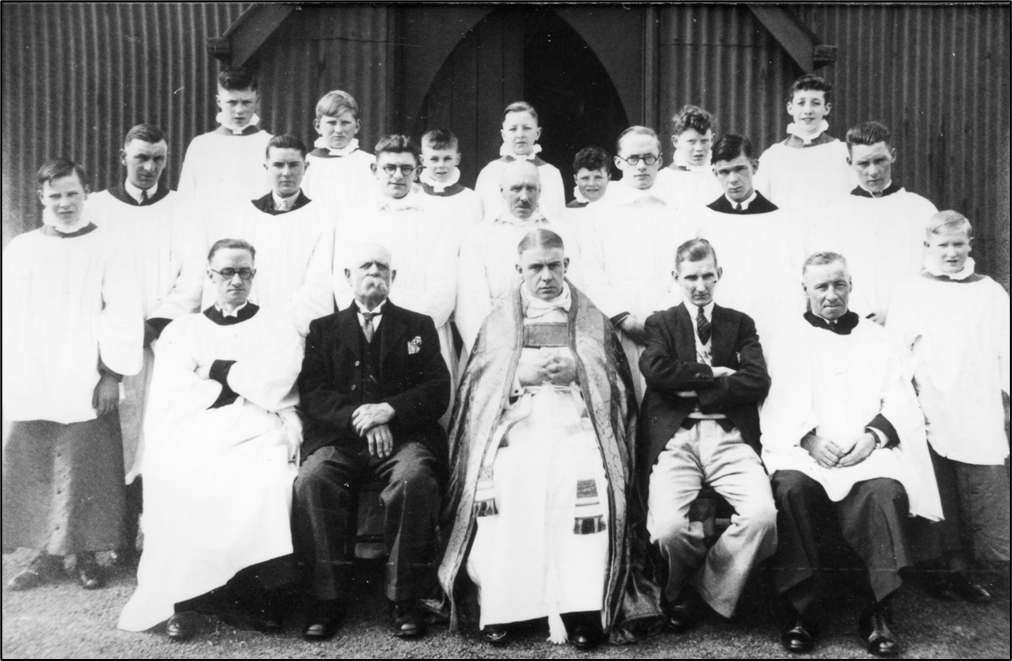
The late 1930s may have seen something of a renaissance at St Mary’s, possibly due to the arrival of a new Rector, the Rev DD Macqueen and Deacon RWT Moore (as curate) in October 1935 and June 1936 respectively. Moore was ordained a priest, whilst in Brimington, in May 1937. The building became illuminated by gas, probably in 1934.
Moore was later to become inducted to the parish of Newbold, where he oversaw great developments in the parish during his tenure as rector, which lasted from 1948 until 1972.
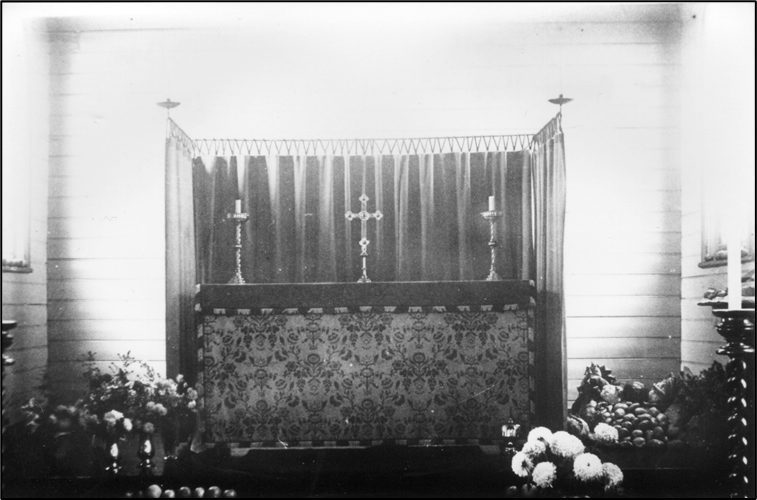
At some time, a new seating fund was established. In 1935 a gift of £10 – donors unknown – was reported. This fund raising perhaps culminated in the ‘many alterations…’ made at St Mary’s Church… in 1937 under Moore’s direction. This included a different pattern of services and a new altar frontal; the building apparently having been freshly painted. Communion on Christmas day that year was celebrated by 38 communicants, there being a large Christmas tree in the church.
In 1942 the Brimington parochial church council (PCC) heard that St. Mary’s was ‘working under difficulties’, but that there had been some pleasing issues such as the ‘loyal band of servers and Sunday School teachers’. There were also heating problems and the congregation had been unable to meet its contribution to Diocesan funds.
Autumn 1944 saw a ‘Church Room’ being opened at St Mary’s, but we do not know what form this took. The same year also saw unspecified repairs being made to the building.
It seems that the St Mary’s church was never licensed for marriages, but baptisms could be undertaken by arrangement. Nor were burials undertaken, but there were memorial and funeral services. In 1938 one of the victims of the Markham Colliery disaster – Harry Hudson – who was buried in Brimington cemetery along with three other victims – had a service held for him at St Mary’s. He was aged only 27, living with his parents at Grove Lane, Brimington Common, having worked at Markham Colliery for 12 years.
During the period after the Second World War churches experienced a resurgence in interest. In the spirit of this rebuild and renewed outlook the rector announced, to the PCC in November 1944, that he was writing to the Bishop of Derby for a new church at St Mary’s ‘when time and conditions were practicable.’
Continuing with what might be termed the final renaissance of the church, a ‘children’s corner’ was opened on 2 September 1945 – a statue of St Mary also having been given by a Mrs S Wigginton. The former had been constructed over the font area with this section of the church being set aside as a baptistry.
In the next part of this story we’ll look at the closing years of the church.
Our thanks to the Derbyshire Record Office and the Brimington Parochial Church Council for allowing us to reproduce illustrations in this blog.
This post was edited on 2 December 2022 to add hyperlinks to the second part of this series of blogs.
 Brimington and Tapton Local History Group
Fantastic article. Well done!
LikeLike