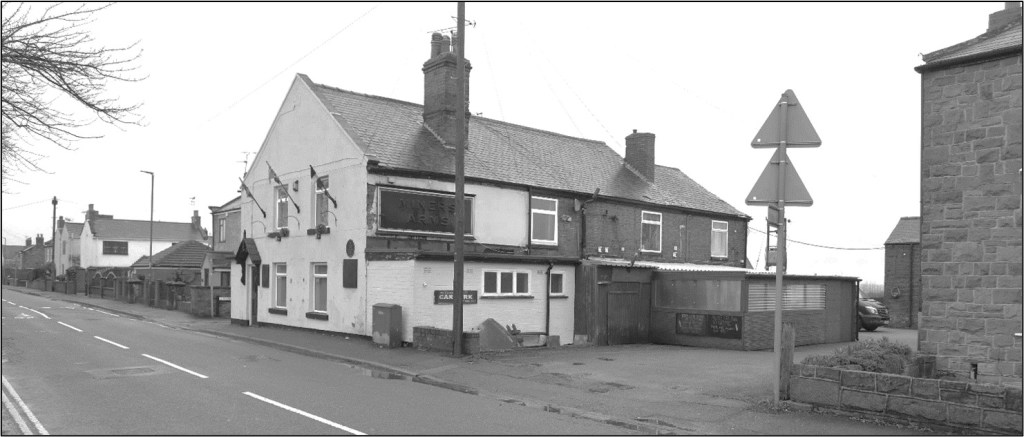
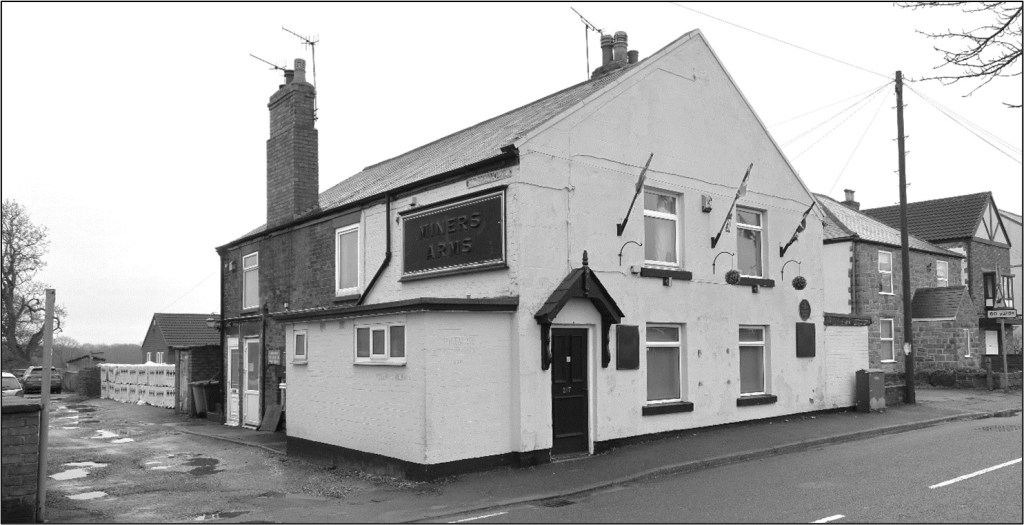
In this blog we take a brief look at the history of the now closed Miners Arms public house.
Introduction
The Miners Arms on Manor Road, Brimington Common is the third local public house to close (in the Christmas 2022 period) in the last few years. To this we can add the recent closure of The Brickmakers Arms on Manor Road (December 2015) and the Corner House, High Street (closed 2012, demolished summer 2016). The Prince of Wales, situated at the junction of Cotterhill Lane with Manor Road, opposite Broom Gardens, was an earlier closure from January 2007. This property was demolished from early 2008 and is now the site of housing.
Fuller history
We will be publishing a much fuller history of the Miners Arms, alongside that of the Markham Arms and The Mill public houses in our next Brimington and Tapton Miscellany (number 16) due to be published this autumn. We have previously blogged about The Mill (which might possibly reopen at some stage, though is currently empty) and the Markham Arms (currently under conversion into a care home).
The Miners Arms – a ‘beer house’
Its history is usefully summarised in John Hirst’s Chesterfield pubs book. The premises were originally a beerhouse. This meant that spirits could not be sold. Consequently, it was not really regarded as a ‘public house’ in today’s understanding and was not listed under its name in 19th century trade directories. Hirst does, however, state that it had obtained a full licence in the 1860s, with a subsequent sale in 1869, then with four cottages to the Chesterfield Brewery Company for £400. Jim McIntosh goes a little further in his ‘North Derbyshire pubs …’ when he describes the premises as being first mentioned in trade directories in 1857 as a beerhouse run by William Salmon; by 1864 it had a full licence – Salmon was still the licensee. The sale of the premises in 1869 described by Hirst actually reveals that the Chesterfield Brewery Company were the tenants. In fact an earlier attempt had been made to sell the property – in March 1868 – when it was described as ‘an old licensed public house’ with four cottages adjoining, occupied by William Salmon and then owned by George Mycroft.
The tithe award does not give details about newly allotted, built or in-construction properties and land following the enclosure of Brimington Common from the act authorising it in 1841. The 1852 rating survey shows William Salmon, with a house and garden on Brimington Common owned by Job Allen. Unfortunately, as remarked earlier, there is no accompanying map, but it seems likely that this house and garden is the beerhouse, or at least the premises from which it grew. Enclosure of the former common land would have seen the building of Allen’s and other properties, in what was an area where were situated a brickworks, coal and ironstone mining, farming and a blast furnace and ironworks run by John Knowles.
An unsuccessful application was made for a full licence at the September 1858 Brewster (licensing) sessions for the beerhouse ‘kept by Mr Salmon’. This was despite a testimonial from John Knowles, ‘a number of other gentlemen; also by the overseer and churchwardens’.
A public house
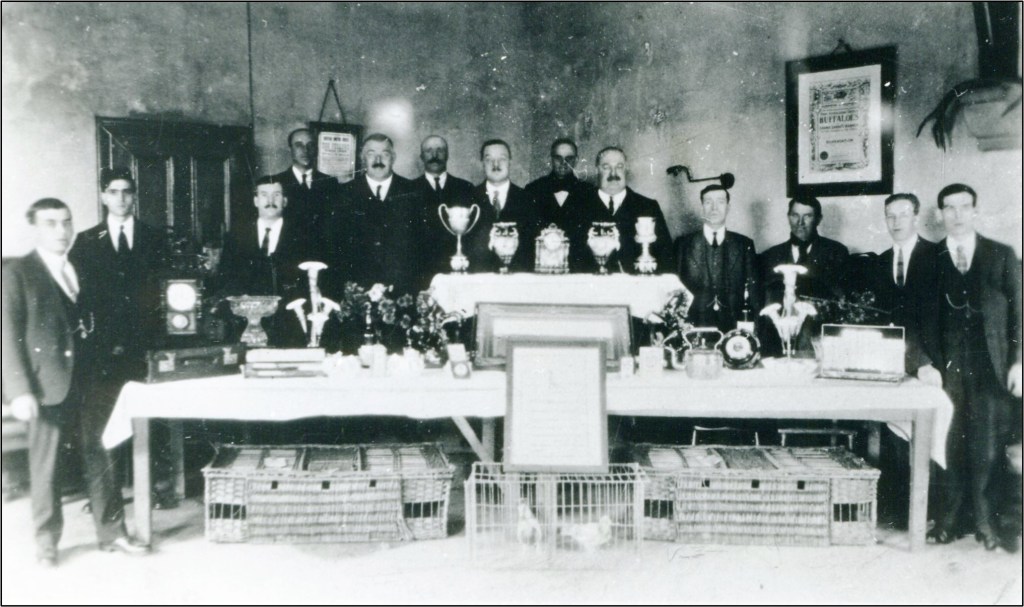
A full licence was actually obtained a year earlier than that stated by Hirst. It was granted at the September 1859 sessions to William Salmon.
The Derbyshire Courier, newspaper carried a report in which it highlighted more of the thinking behind the pros and cons of granting the licence application. We learn that Salmon had previously been landlord at the Bugle Horn (now demolished on Hall Road) where he had been well-regarded. Accompanying the application was a memorial ‘signed by the most respectable people in Brimington.’ Mr Smith, a surgeon, had also sent in a letter, pointing out that without its full licence ‘… in the case of accident stimulants could not be obtained for a considerable distance…’. Again, it was pointed out that the nearest fully licenced premises were in Brimington, where there were then three such premises ‘all within one hundred yards of each other.
The presiding magistrates discounted the point made by Dr Smith, instead expressing concern about the number of Irish residents in the area and general disorder, actual or potential, alongside speculating where any alcohol contributing to this might have come from.
Magistrate Mr Maynard is recorded as saying that ‘Brimington Common is a very riotous place’, but he was unsure as to whether drink contributing to this had been obtained at the Miners Arms. It was claimed that there had been two cases from Brimington Common of ‘riot’ recently.
Despite all this unfavourable discussion after a short consultation the license was granted. It should, of course, be noted that the Brickmakers Arms was also nearby, which it is thought was opened in 1853, though this was, like the Miners Arms, originally a beerhouse and so unable to serve spirits.
As stated above the first directory entry for landlord William Salmon is in 1857, with him, being noted as a ‘beer seller’ in 1862, then at the Miners in 1864 onwards until he is last mentioned in 1876. Salmon died in July that year, aged 53. By 1881 his wife appears to be the licensee or at least holding the licence in her deceased husband’s name, as in September 1889 it is being transferred by Frederick William Salmon to a Charles Taylor. This probably coincides with the fully licensed premises being advertised by Chesterfield Brewery Company as to let in May 1889. No doubt as an inducement, it was noted as being ‘near the cricket ground’ – a reference to the sport being played on the recreation ground opposite.

A few events
The sequence of the landlords thereafter is plotted in the forthcoming Miscellany article, but we will pick out some notable landlords and events in this account.
In 1881 the public house had been a stopping off point for murderer Alfred Gough. He had killed a six-year-old girl – Eleanor Windle from Almond Place – in August 1881. Before disposing of her body in a plantation at Hollingwood, he had hidden it in his hawker’s cart, stopping off at the Miners Arms for refreshment before heading to Hollingwood. Gough was convicted of the girl’s murder and hung at Derby prison on 21 November 1881.
Thomas Clews Moss appears to have left in March 1901, when his household furniture and effects were sold by auction. These included some butcher’s equipment and ‘a wooden erection 10ft by 8ft, with galvanised iron roof and glazed windows … [and] butchers blocks’ which probably indicates he was carrying out a butchery business at the premises.
Ernest Atkins was noted as landlord in February 1934 and in 1941 – the last of the Kelly’s directories in which we can trace landlords. Walter Turton briefly wrote about his uncle Ernest Atkins in our Miscellany 3, who he stated moved from a house in Tapton City to small cottage down Anderson’s Lane, at the side of the Miners Arms, later becoming landlord at the Miners. Atkins died in February 1943, this was followed by a temporary transfer of licence to his widow Doris in April the same year.
Later history
The pub’s later history was tied up with the purchase of the old Chesterfield Brewery Company by Mansfield Brewery in 1934. The Chesterfield company had its brewery on Brimington Road. This was latterly part of the Trebor sweets factory – now the site of 1 Waterside Place.
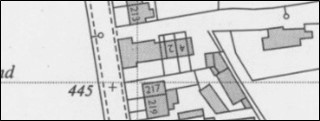
In 1989 Mansfield sold the pub to Burtonwood Brewery of Cheshire as part of a lot of 11 pubs. This company then sold their portfolio of pubs – numbering some 460 premises and including the Miners Arms – to Wolverhampton and Dudley Breweries Ltd in 2004. In 2007 this company renamed itself Marstons plc.
The Miners Arms public house on Manor Road, Brimington Common freehold was advertised as for sale from early spring 2013, remaining so at the end of the year. The public house remained in operation throughout. The owners had been Marston’s Pubs Ltd., from October 2005. The property was described as a ‘traditional two storey public house’ in the sale particulars. These also described the building as having a gross internal area of approximately 1,437 square feet on a plot of around 0.168 acres. Traditional style furnishing was set around a single server, ‘comprising snug area for circa 20 people, games area and entertainment area, all set out for informal drinking.’ There were the usual ancillary trade areas such as customer W.C.s, commercial kitchen, stores and basement cellarage. The private accommodation was situated on the first floor, comprising four double bedrooms, bathroom, living room, dining room, kitchen and stores. Externally, to the side, the particulars described a trade yard with parking for around six vehicles and outbuildings for storage.
In 2006 a plaque was erected on the public house to Joe Payne, who scored 10 goals in one football match for Luton Town in their division three (south) 12-0 victory over Bristol Rovers in April 1936. This record still stands. Payne lived nearby in a now demolished house and trained on the recreation ground opposite. It is believed that the plaque was removed, at the request of the family, in the early summer of 2024, for possible re-erection, at some stage, at Chesterfield Football Club’s stadium. It was funded by the parish council and the former Brimington and Tapton Community Forum.
Closure
It’s a sad fact that the public house trade is very difficult and has been for some years – witness the closure of the Miners around the Christmas period of 2022 and of the other pubs mentioned in this blog. Drinking habits have changed and the widespread availability of cheap alcohol in supermarkets has added to difficulties encountered, alongside increased energy prices.
Brimington Common now has no licenced public houses – a sad fact repeated in many such areas across the country.
Sources used in this blog have included the following:
- J Hirst Chesterfield Brewery, the story of Chesterfield’s second largest brewery (2021)
- J Hirst, Chesterfield pubs (2005)
- J McIntosh, North Derbyshire pubs past and present (2008)
- Various contemporary newspapers
- Derbyshire Record Office tithe and enclosure awards and 1850s rating surveys.
- P Cousins ‘Henry Bradley’s Brimington years’, Brimington and Tapton Miscellany, 10, (2018)
- Various contemporary trade directories.
- W Turton, ‘My memories of Tapton City’, Miscellany 3 (2011).
- http://breweryhistory.com/wiki/index.php?title=Burtonwood_Brewery_Co.(Forshaws)_Ltd.
- http://breweryhistory.com/wiki/index.php?title=Wolverhampton_%26_Dudley_Breweries_Ltd.
- http://www.jamesabaker.co.uk/properties/2013-03-20-21-19-40/particulars.pdf (this link is not now valid).
- Miscellany 6 (2014).
- Brimington and Tapton Community Forum Calendar (2007).
The forthcoming account on ‘The Markham Arms, The Mill and The Miners Arms: A Short History of Three Brimington Pubs’ will be published in our Brimington and Tapton Miscellany, number 16 and will be fully referenced.
 Brimington and Tapton Local History Group
Thanks for sharing ✓✓
LikeLike