A longstanding mystery at Tapton – just whose coat of arms appears on a 19th century detached cottage – has been solved. We revealed the answer that’s baffled interested local people for many years, at our September meeting and pick up the story in this blog.
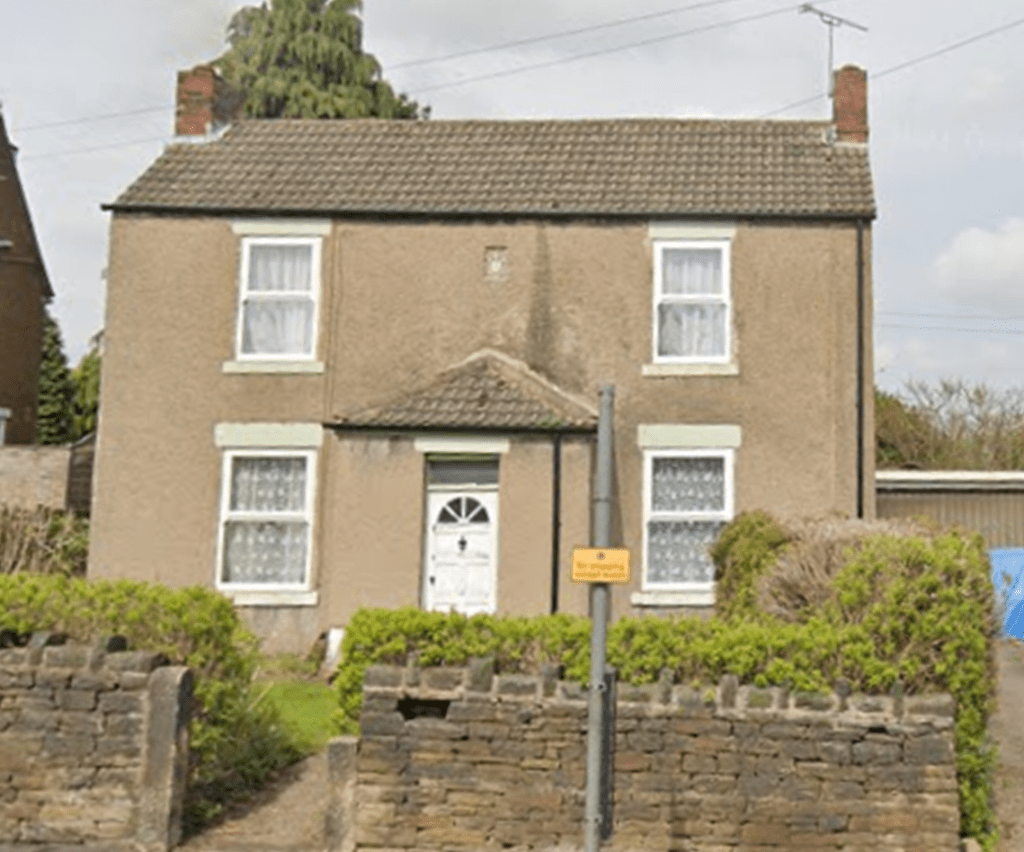
The coat of arms appears on the cottage – number 378 Brimington Road, Tapton (near the Tinksersick junction) – illustrated here.
You might just be able to see them near the guttering between the two upstairs windows. There’s a close-up taken by Paul Freeman below.
A chance discovery
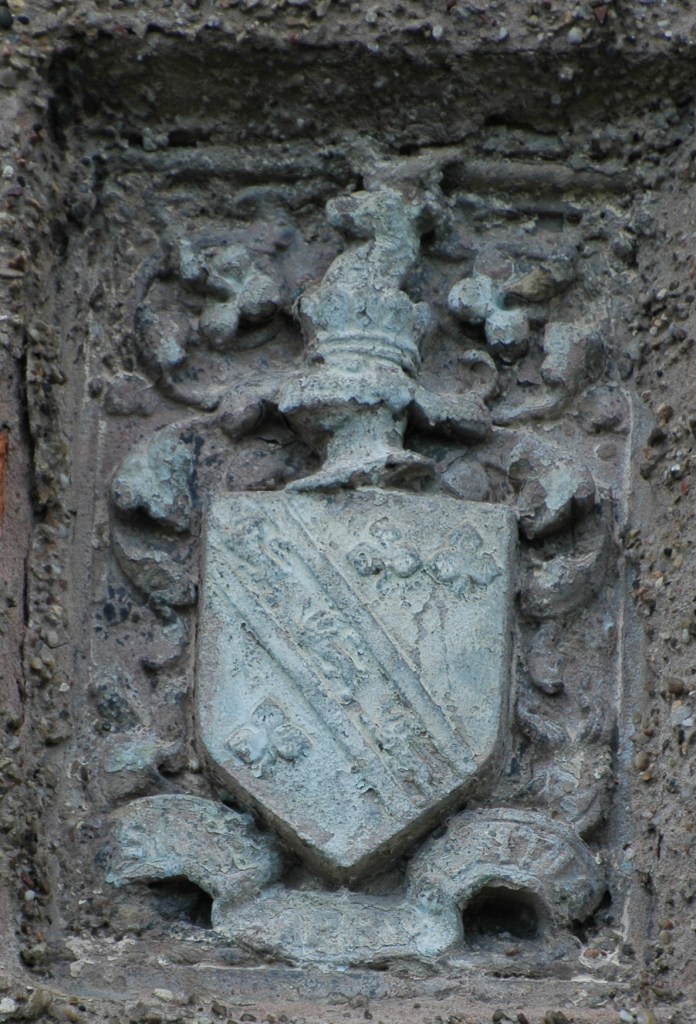
After quite a bit of detective work, with a chance find, we have now been able to identify these arms. At first we thought that they were possibly one of the Lords of the manor of Tapton. After checking it was obvious that they weren’t. Then it was a search through publications such as Lyson’s Magna Britannia and Max Craven’s Derbyshire Armory, but again to no avail.
Then a chance inquiry on a totally unrelated issue helped identify the coat of arms
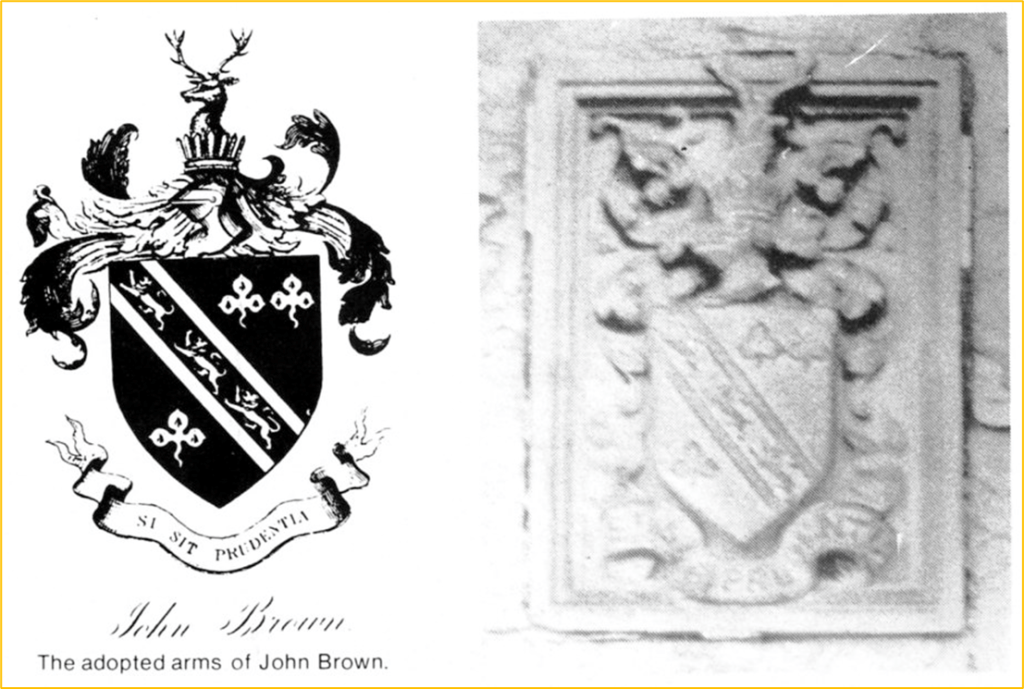
The inquiry related to an issue in Cutthorpe. It involved a search in Judith Stubbs’ 1980s book ‘ A history of Cutthorpe part three’. Whilst examining the book our researcher noticed the illustration we’ve pictured in this blog – and it’s the same as our Tapton plaque. So, the mystery was solved. They are of John Brown – but don’t be surprised if you haven’t heard of him.
Who was John Brown?
Brown was born in Scotland in 1815. By 1839 he was assistant agent to the Duke of Devonshire, based at Hardwick. Presumably on the back of this he began to develop an extensive land agency business. He had obviously made enough money to buy Rose Hill in Chesterfield in 1851 (now the site of the Town Hall). By this time, he had extensive estates in Newbold and Cutthorpe.
1862 saw him play what was described as an important role in quelling the Barron de Cumin Riots. These happened when the Barron appeared in Chesterfield to speak against the Catholic religion. The large number of resident Irish took exception and rioted. The mob was quelled by the Chesterfield Yeomanry. Brown was their noted captain.
He was active in local government, including spells as a councillor and was mayor of Chesterfield from 1879 to 1881. In that year his wife Catherine died. He died a year later.
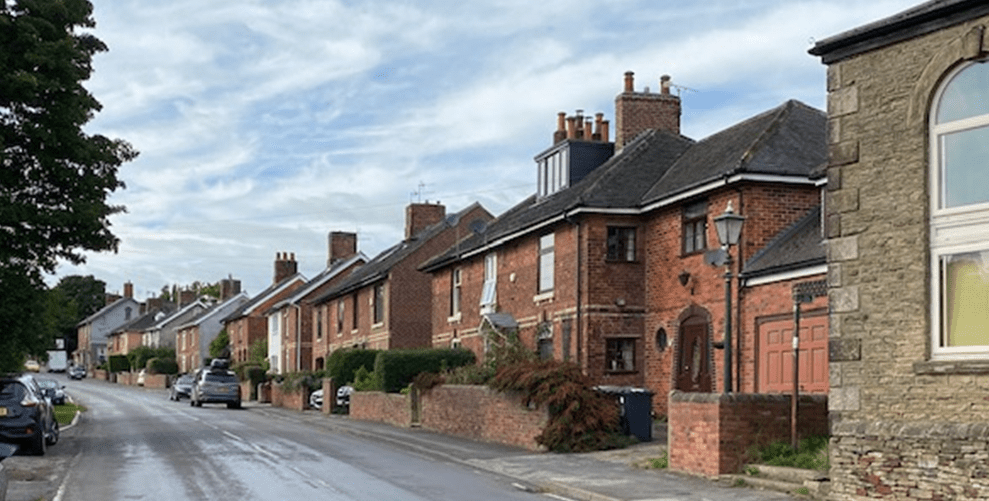
Brown was generally seen as a benevolent landlord. He carried out much work rebuilding Cutthorpe. For example, he built what were called ‘The Blocks’ – now The Poplars. He also built the school, now the institute, and other properties.
Brown adopted and altered – without permission – the Browne of Snelston coat of arms. He possibly had a job lot made of the same coat of arms that appears at Tapton – as he installed them in some of the properties he built or rebuilt. The motto is ‘Si Sit Prudentia’ – ‘if there be but prudence’.

The history of our Tapton coat of arms
In the late 19th century there was a pinfold on Brimington Road. This was used by the Pinder – a parish officer –in which impounded stray animals would be kept. There was similar provision in Brimington on Devonshire Street. The 1876 Ordnance Survey map, illustrated in this blog, shows its position. In 1881, but not in other census enumerations, a farm labourer living on Brimington Road gave his address as Pinfold House.
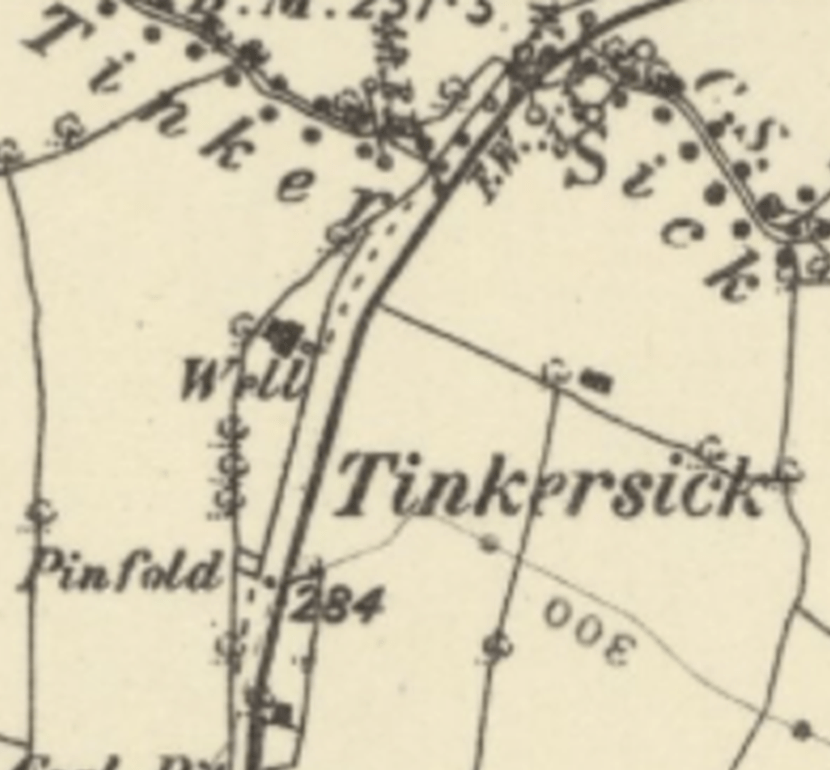
Surveyed: 1876, Published: 1883. Courtesy National Library of Scotland).
This may be the house which survives just to the north of the site of the pinfold – 378 Brimington Road. It’s on this house that you’ll find our formerly mysterious plaque.
In 1826 and 1849 we know that a property hereabouts was owned by one time Lord of the Manor of Tapton Adam Barker Slater. He died in 1853. But John Brown’s will doesn’t mention the property – but as it doesn’t mention others either, so this is not of major concern.
So, the probable sequence looks like this.
Sometime after Adam Barker Slater’s death in 1853, John Brown buys the property. Brown installs his adopted coat of arms in the house, like those at Cutthorpe, or rebuilds the property in which he installs his coat of arms.
A long-time mystery is solved with a good original photograph, some research and quite a lot of luck.
Have a look at this house next time you’re on your way to and from Chesterfield. And now you know the coat of arms is that of John Brown.
Our thanks to Philip Riden, Paul Freeman and Philip Cousins for unravelling the mystery.
This is a follow-up post to one now deleted that advertised we would be revealing the name of the person to whom the coat of arms belonged, at our September 2022 meeting.
 Brimington and Tapton Local History Group
Great article everyone
LikeLike