In our December 2021 blog we promised a little more detail about the history of ‘The Farm‘ (24 and 24a High Street), Brimington. In this blog we do, indeed, take a further look at this Grade II listed building, which is largely hidden up a small yard off High Street.
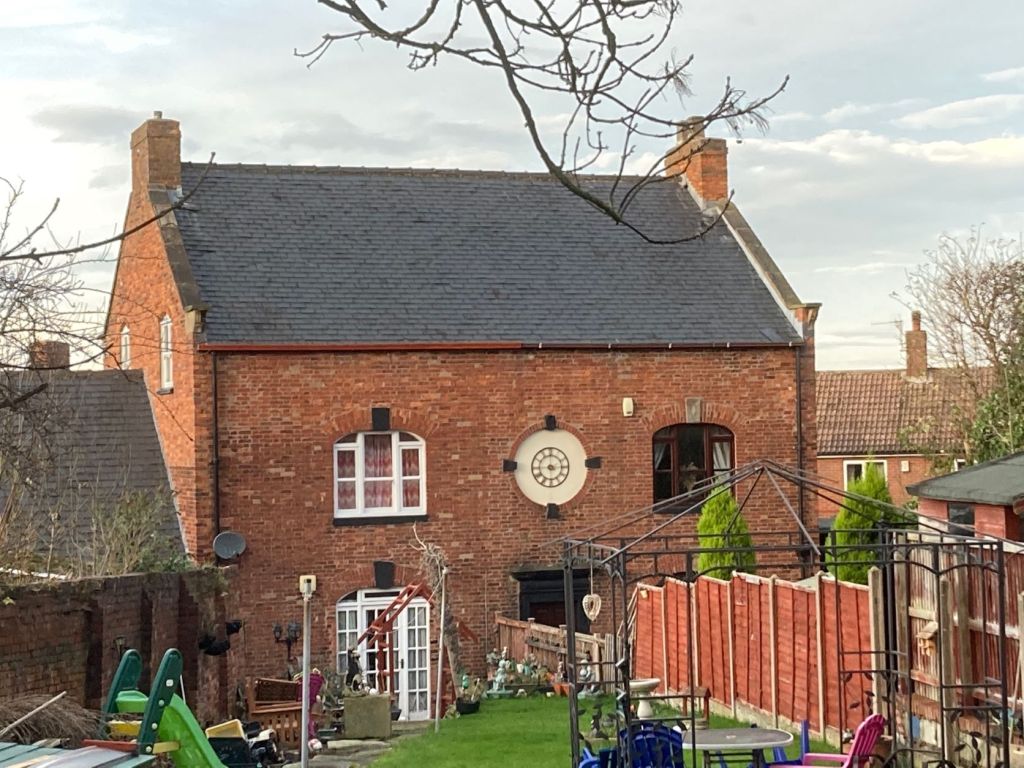
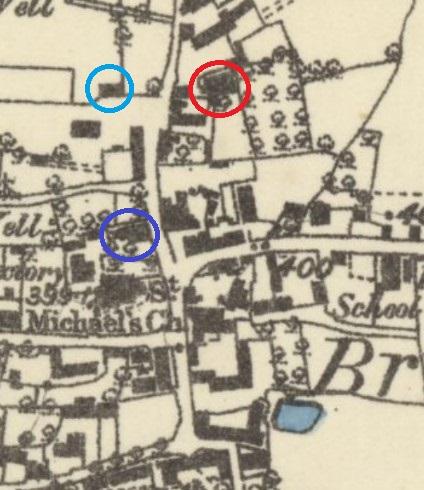
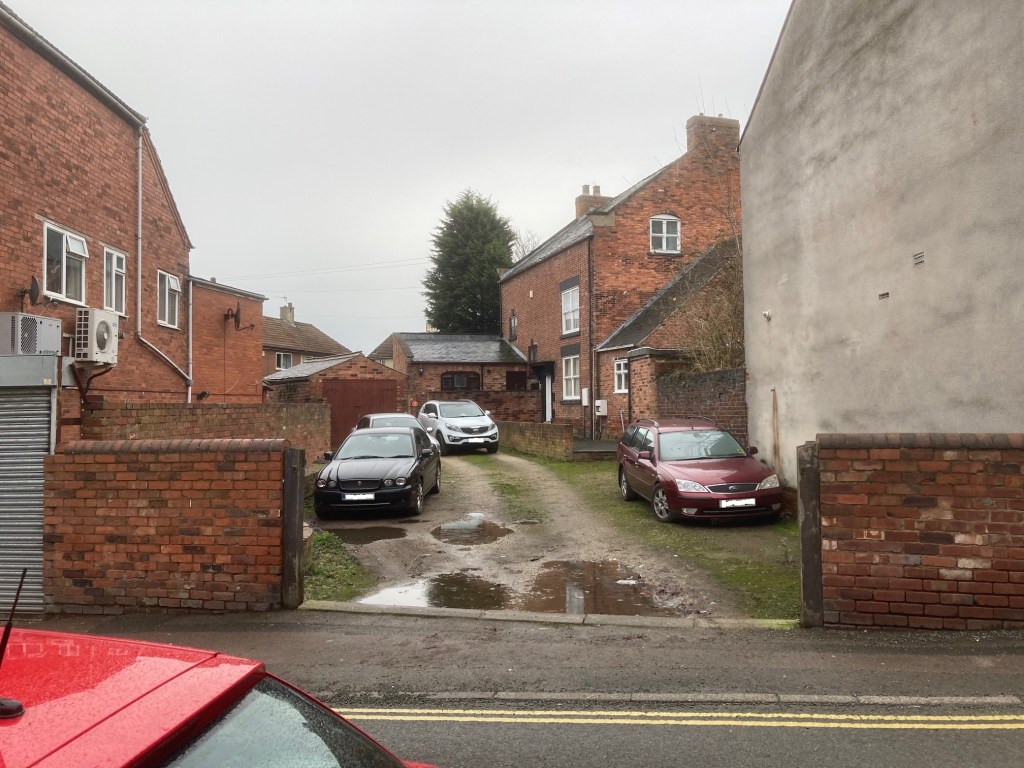
We know surprisingly little about the early history of this property, which for many years was simply known as ‘The Farm’. There is a datestone above the north facing entrance dated 1763. The 1977 Grade II listing entry describes the property as red brick with coped gable ends, slate roof and end chimneys, of two storey, generally two windows, sashes or casements. Centre six panelled door, top two panels now glazed, flat hood on brackets.
If you disregard the Victorian and later building developments in the area you might soon appreciate that The Farm’s rear elevation, would originally have looked out on to farm land. Its outbuildings and orchard are now covered mainly with the 1950s Coal Industry Housing Estate. Today The Farm – now simply 24 and 24a High Street – looks slightly strange, situated down a small yard off High Street, though The Farm certainly wasn’t on its own. Another surviving farmhouse is nearby Bull Farm. The house is now a childrens’ nursery. This is similarly situated on a north to south axis, with its farm buildings to the north (one actually survives on Heywood Street, as a joiner’s workshop).
In the 1853 enrolled enclosure award a John Greaves owned The Farm property with about 42 acres of land in the village. In 1898 William Rodgers, a Brimington butcher who had owned the property, died. The farm and its buildings, along with six fields and an adjoining butcher’s shop were sold to Andrew Derbyshire for £1,300.
By 1913 Derbyshire had died, but had evidently constructed two houses and other premises on part of the land. This was let to Messrs Albert Land and James Barnes. The Land’s business became well-known in Brimington right into recent memory. It is currently Birdis’ shop. Maggie Sanderson has written about this – her late mother’s and father’s business in our Brimington & Tapton Miscellany 8. The Farm itself and land of some 13 acres was let to Thomas Starbuck.
Sometime, possibly in the 1930s, The Farm was converted into two dwelling houses. A Brimington resident remembers moving into one half in 1936. Mrs Elsie Rodgers was in the other house – she was the sister to Gordon Land (latterly the owner with his wife Mona of the Land shop business). It’s thought that the Cropper family had lived in The Farm previously. At that time the Francis family had what was described ‘as the longest’ section of the house.
In 1943 the property was described as ‘two dwelling houses (formerly a dwelling house used as farmhouse)’ occupied by H Rodgers and another together with outbuildings, orchard, garden, farm yard and several closed of land – comprising 12 acres, 9 roods and 29 perches. It was still owned by the Derbyshire family who were letting two houses and shop premises on part of the land fronting High Street to Messrs John Land and Andrew Derbyshire.
1951 saw the trustees of Andrew Derbyshire sell various closes of land, the orchard, farm buildings, stable, cow house, etc and two garages on the site occupied by A Land to the then occupier Harold Murkin of 31 Queen Street. The area sold was 12 acres 2 roods and 32 perches. Significantly this sale did not include the farm house.
In 1954 Murkin sold his land holding to the National Coal Board who, under the auspices of the Coal Industry Housing Association constructed an estate on the land, accessed from lower down High Street. The farm house building was not now part of his property. It’s not known whether the Derbyshire family retained the property or sold it on at some stage.
By the mid-1990s, as we saw in our previous blog, both halves of the property were certainly under one owner, who oversaw a comprehensive refurbishment of the property.
Some further research work, particularly using electoral registers, would doubtless reveal more about its past. Today, however, The Farm, for those ‘in the know’ is a reminder of Brimington’s agricultural history.
We are grateful to Mrs E Ward for information on The Farm – she moved there from Hollingwood Common in 1936. Our thanks to Keith Bannister who allowed access to the building when it was under refurbishment in the 1990s.
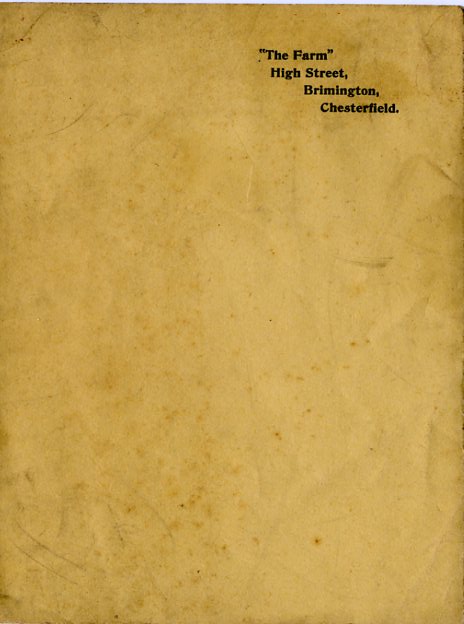
We’re also grateful to Mrs M Harwood of Littlehampton for the headed notepaper used in this blog. Her Aunt had also moved to Farm, presumably around about the same time as Mrs Ward. and it is believed lived there until the mid-1990s refurbishments. The references to Bull Farm are from Vernon Brelsford’s 1937 ‘History of Brimington…’
Of great use has been an abstract of title in the Derbyshire Record Office, Matlock, of The Farm (D3488/3/1-8).
 Brimington and Tapton Local History Group